Les animaux dans l’art à PAN 2026 – et autre chose(s)
Top
English version : click here
Informations pratiques: cliquez ici
galerie Paul Ruitenbeek, stand 135
Ça y est, PAN Amsterdam vient de fermer ses portes. Comme toujours, c’est passé comme un courant d’air, et comme toujours, galéristes et visiteurs sont contents, les uns de leurs ventes, les autres de leurs trouvailles – qu’ils les aient achetées ou non. À ce propos, je peux vous révéler que le Thérèse Schwartze dont je vous ai parlé dernièrement, ira sans doute à l’Amsterdam Museum, et que de toute façon, il restera aux Pays-Bas.
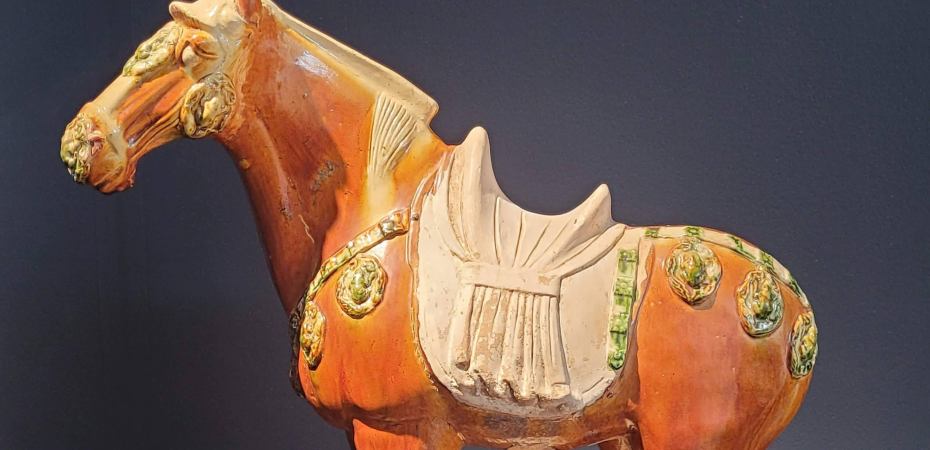
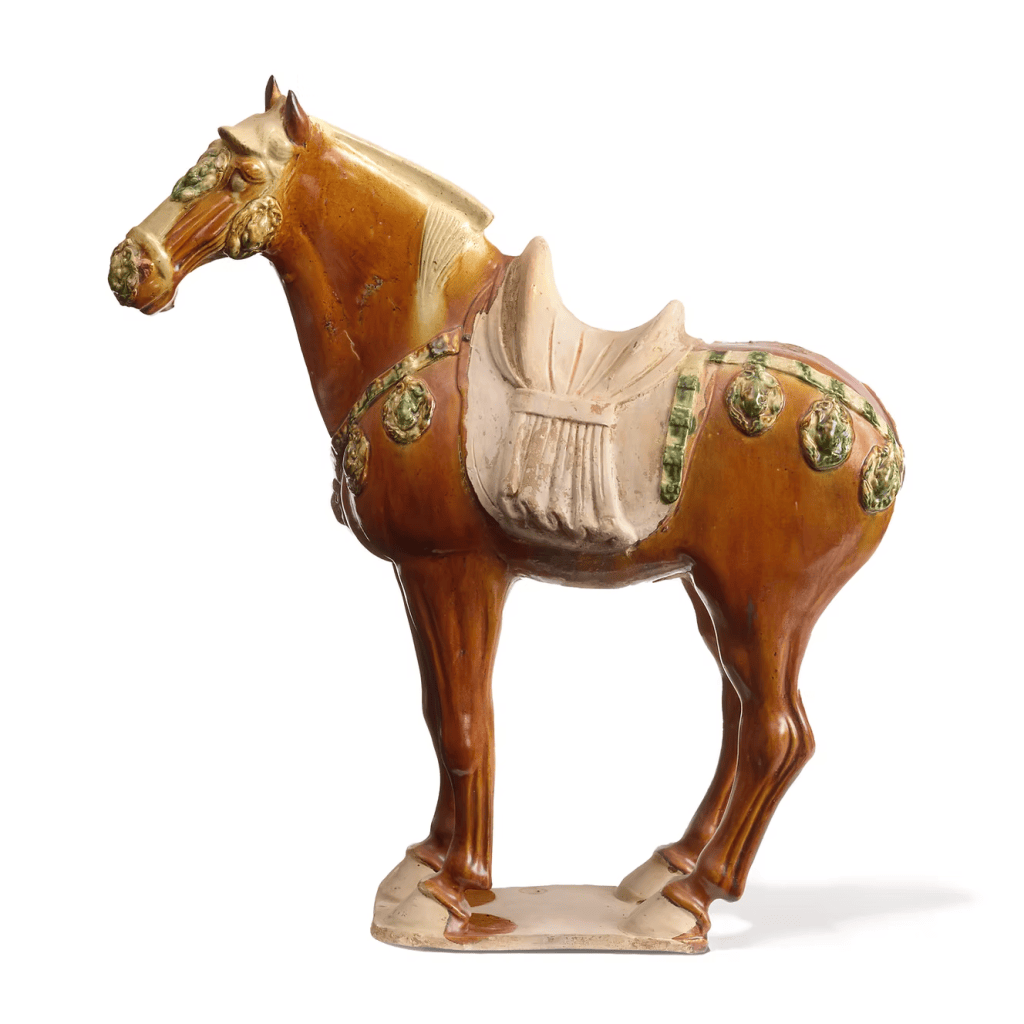
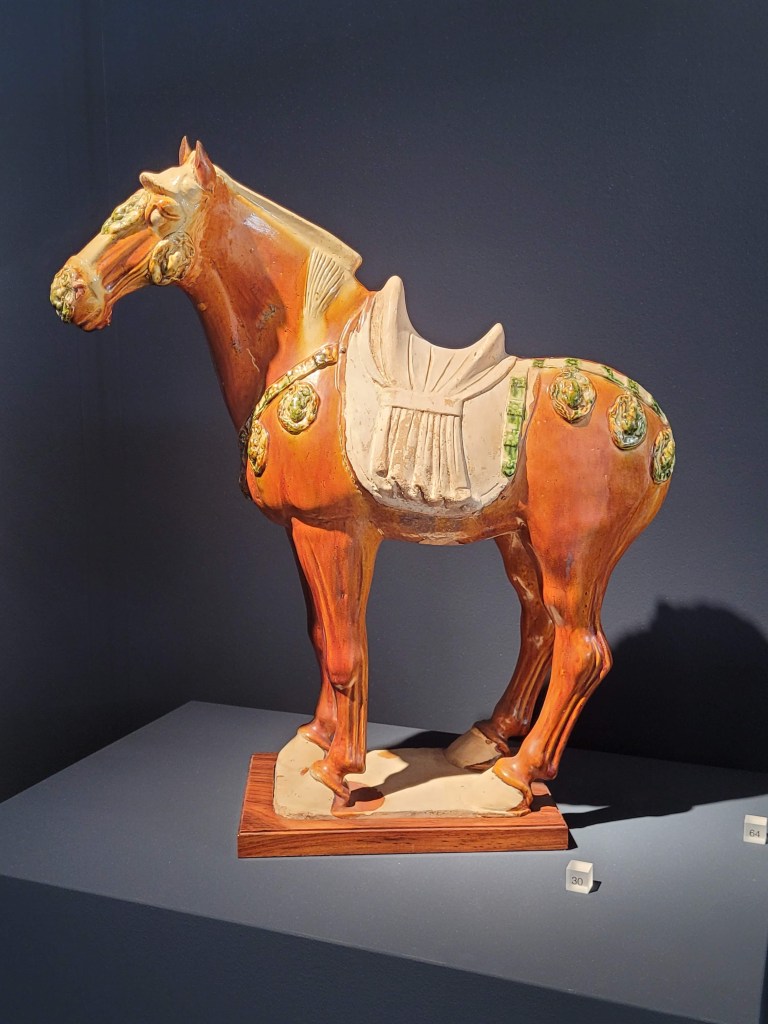
Quant à mes trouvailles, mes découvertes à moi, elles sont multiples. Tout d’abord, un aveu: j’aime les chevaux. J’admire leur force, leur élégance, leur «humanité», bref, leur beauté. J’ai un faible pour les chevaux chinois en particulier – ceux en céramique ou en bois, s’entend. Alors, chez Paul Ruitenbeek (stand 135), je suis tombée en arrêt devant ce cheval de la dynastie Tang, plus que millénaire, et pourtant pimpant comme s’il sortait de l’atelier de l’artiste. Cette statuette représente un tianma, un cheval céleste, venu de l’Ouest, et très prisé par les classes supérieures de l’époque. Dans sa forme céramique, il était placé dans les monuments funéraires. Ici, l’animal est à l’arrêt, et semble attendre son cavalier patiemment – quitte à partir aussitôt au trot. Son vernis est impeccable, étonnant après tant de siècles. Oui, décidément, ce cheval m’a plu.
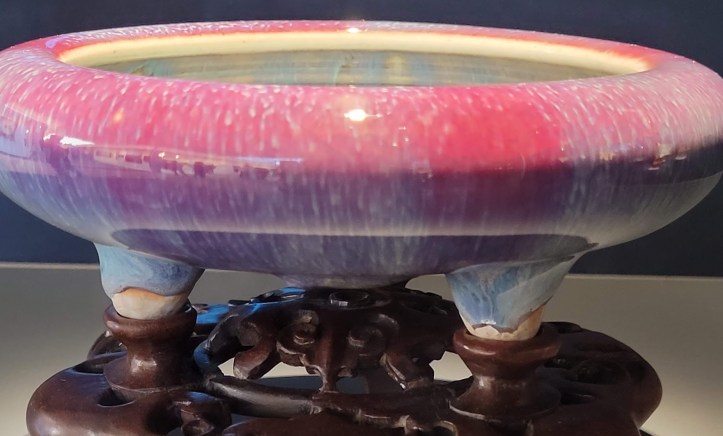
Mais ce n’est même pas la pièce maîtresse de Ruitenbeek. Ça, c’est un encensoir en porcelaine de couleur lilas, datant du XVIIIe siècle. Il repose élégamment sur trois pieds, et il a l’air parfaitement lisse. Si lisse qu’on est tenté de le toucher, pour voir s’il est aussi doux qu’il en a l’air… Une pièce pour connaisseurs…
Partant du stand de Paul Ruitenbeek, j’ai d’abord visité quelques stands à «valeurs sûres», comme Albricht (103) et ses nombreuses toiles des impressionnistes néerlandais Isaac Israëls et George H. Breitner, le premier représenté surtout par ses portraits de femmes élégantes, Breitner par ses «portraits» de sa ville, Amsterdam, en travaux, et en pleine croissance à ce tournant du XXe siècle.
Chez Daatselaar (40) encore Israëls, mais aussi les frères Dufy (oui, Raoul avait un frère cadet, Jean), mais aussi (parmi tant d’autres) Jean-Pierre Cassigneul (né en 1935…), et puis… une des rares femmes parmi les peintres du XIXe siècle, Henriette Ronner (née Knip, 1821-1909).
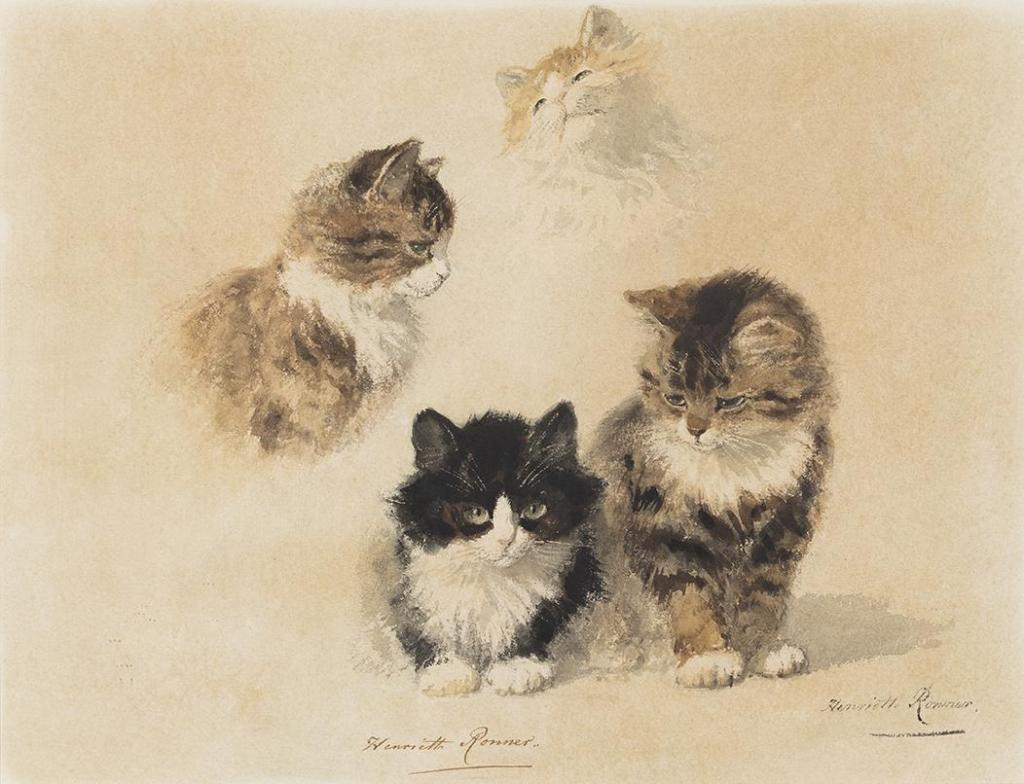
Ronner est surtout connue pour ses «portraits» de chats. Ici, des chatons, des boules de duvet. C’ est adorable, et néanmoins, c’est considéré comme un sujet «mineur». À son époque, les tableaux de Ronner étaient très prisés. Ce n’est qu’au XXe siècle qu’on a commencé à dédaigner ce genre de sujet, et que l’oeuvre de Ronner est passée au second plan, pour être redécouverte aujourd’hui.
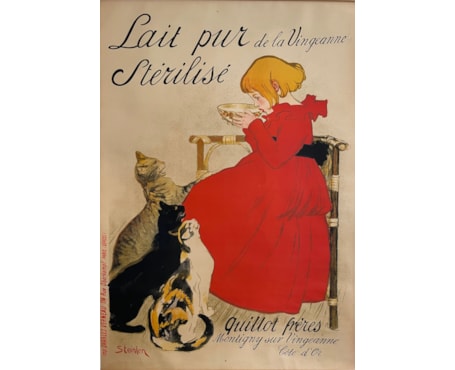
Je me demande s’il en a été de même des fameux chats de Steinlen (Galerie Stylo, n0 93). Bien sûr, de lui on connaît surtout ses affiches, ses illustrations. Est-ce que son art était – ou est – considéré comme un art mineur? (C’est une vraie question; je ne connais pas la réponse.)
Tout d’ un coup, ça m’est venu à l’esprit: il y en a, des animaux, ici! Bien sûr, de tout temps on les a représenté en peinture – surtout les oiseaux et autres animaux comestibles, vivants ou morts… ou les animaux exotiques. Mais ce que je vois à cette foire est un peu différent; je vois toutes sortes d’animaux sous forme de sculpture – et souvent ils ont un côté quelque peu… bizarre, inquiétant, par la texture surtout. Question subsidiaire: la taxidermie aurait-elle acquis des titres de noblesse artistique? J’ai l’impression d’en voir à différents endroits, ou alors des matériaux semblant imiter la peau, les poils…
C’était notamment au stand de Jaski (39), bien connue pour sa grande collection de peintures CoBrA. Bien sûr, là aussi, on voit des animaux, des oiseaux, des chats… mais ce n’est pas de ceux-là que je veux parler. Parmi les autres «poulains» de cette galerie: Les Deux Garçons (Michel Vanderheijden van Tinteren (1965) et Roel Moonen (1966)). Leurs animaux à eux sont faits, du moins en partie, à l’aide de la taxidermie. Ils utilisent aussi d’autres techniques, comme la sculpture ou la peinture, mais ce qui les caractérise, c’est qu’on veut les toucher, les caresser, et surtout les consoler – et quelquefois repousser. Je connaissais l’oeuvre des Deux Garçons, du moins en partie – mais je constate une évolution. Il me semble que certains de leurs animaux deviennent «humains» (et, partant, plus touchants), tandis que d’autres sont plus inquiétants.
Il se trouve que ces animaux «humains» et un peu inquiétants, voire repoussants, j’en ai vu ailleurs dans cette foire. Plusieurs. Rien que le gorille à l’entrée que je n’aimerais pas trop rencontrer au coin d’un bois…
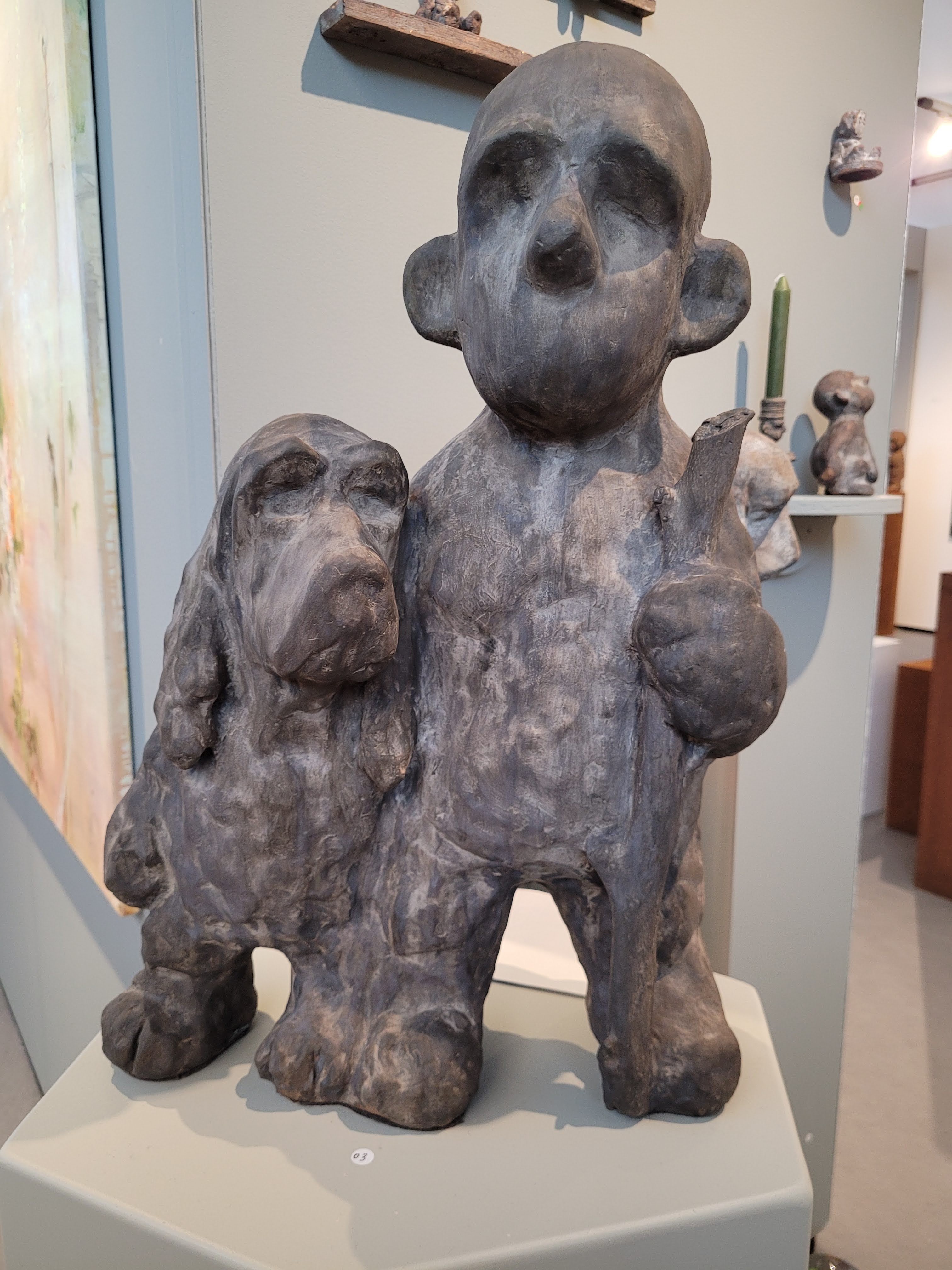
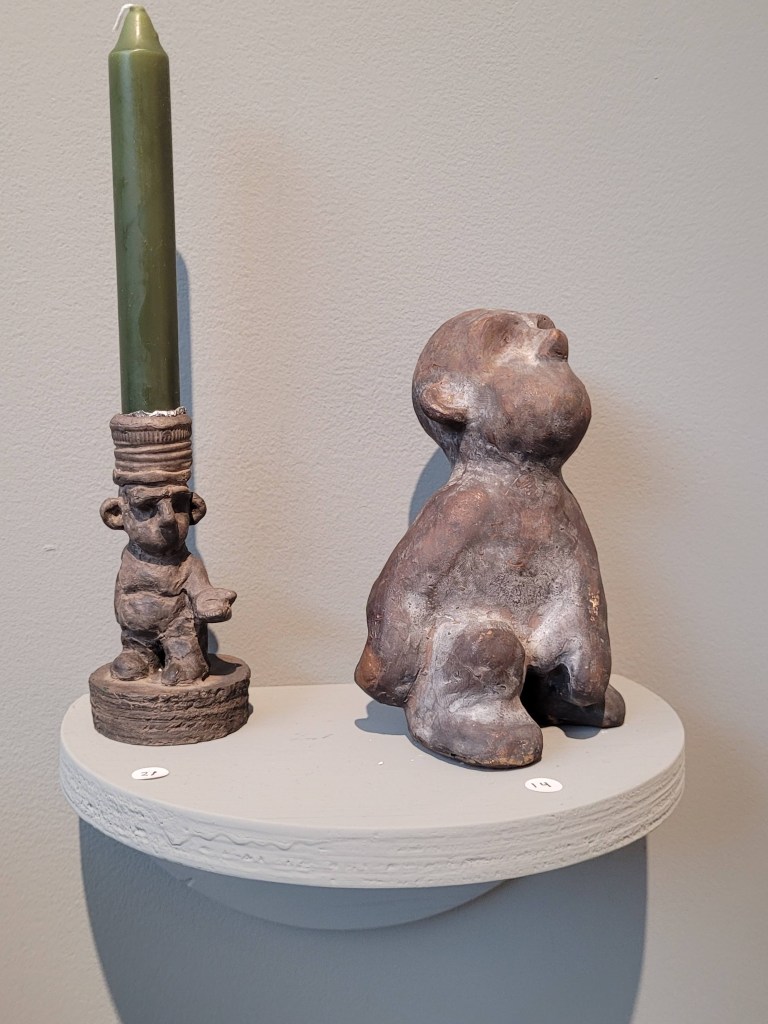
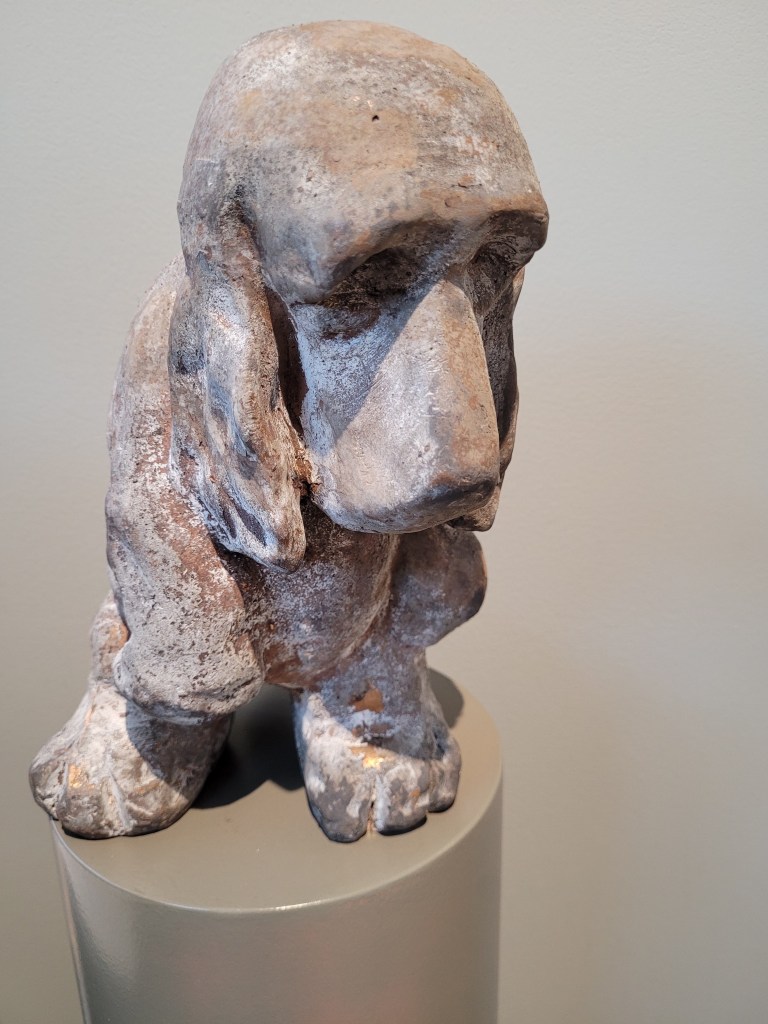
Cependant, il y avait également des animaux charmants, même dans l’art contemporain. Prenez les figures d’Erik Buijs (1970). Ses bonshommes et ses chiens peuvent avoir un côté Charlie Brown, soucieux, inquiets, on a surtout envie des les consoler, de les prendre dans ses bras, quelle que soit leur taille ou leur matière (galerie Huub Hannen, 57). Ils sont humains sans être inquiétants.
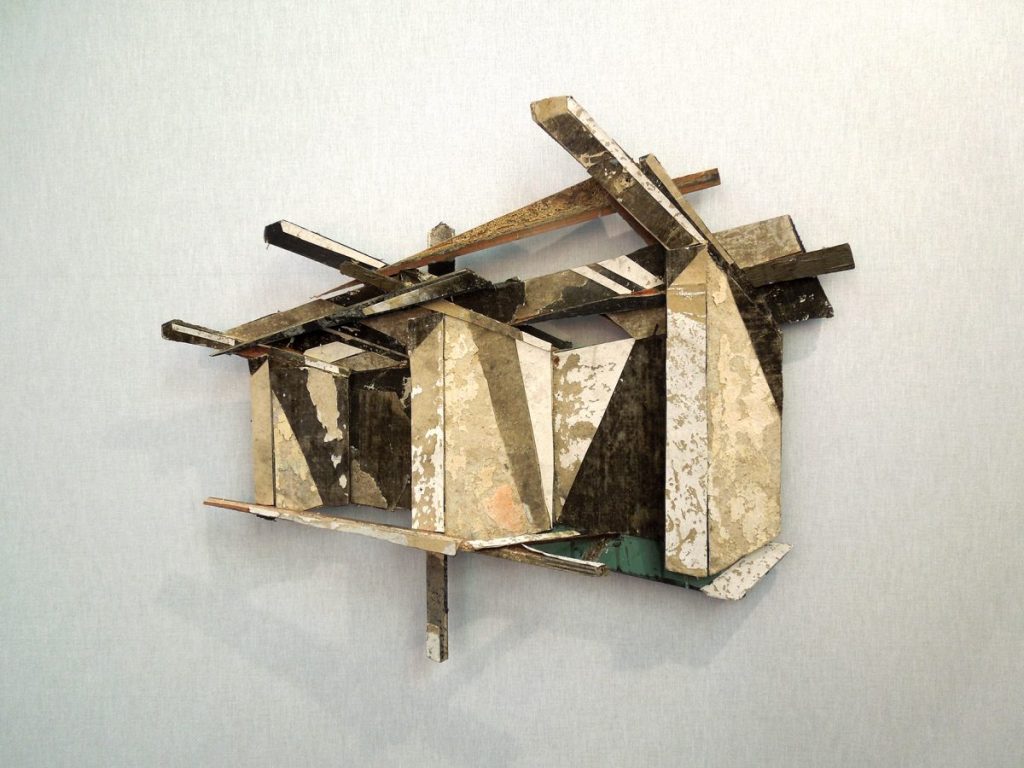
Pour finir, un artiste, Pim Palsgraaf (1979) dont l’oeuvre n’a rien d’animal ni d’humain ni – à mes yeux – de triste ou d’inquiétant. Au contraire, même si Palsgraaf tire ses matériaux d’endroits en déclin, d’usines abandonnées, de bâtiments en ruine. Il travaille avec des matériaux de récupération, du bois, des métaux. Il en fait quelque chose de nouveau, sculpture, «tableau» ou autre structure, en tout cas un objet qui invite à être examiné de partout, qui intrigue – et qui symbolise une renaissance, puisque le rebut est transformé en oeuvre d’art. (NL=US Gallery, stand 45).
Informations pratiques
PAN 2026 est terminé, il faudra attendre novembre 2027 pour un nouvelle version. Mais la semaine prochaine se tiendra Amsterdam Art Week (un grand nombre de galeries y participent), en décembre l’Affordable Art Fair, toujours à Amsterdam, et au printemps le Rotterdam Art Fair, sans compter TEFAF, la plus grande foire d’art d’Europe (Maastricht, mars 2027). Sans compter les foires et autres événements culturels à Anvers et Bruxelles…
Plus d’images dans la section anglaise
Back To Top – Retour en haut
English version
Art Fair and Animal Farm
Animals in Art at PAN 2026
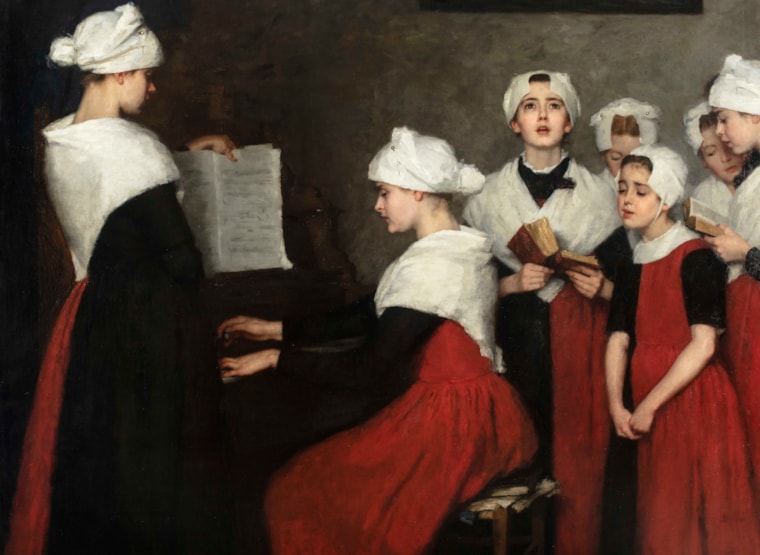
It’s finished – for the time being. PAN Amsterdam just closed its doors. As always, the fair, however buzzing, was over before we knew it; and as always, gallery owners and visitors are happy, either with their sales or with their discoveries. In this respect, I can reveal that the Thérèse Schwartze painting (at Lawrence Steigrad’s) I told you about in my earlier article on PAN 2026 will probably go to the Amsterdam Museum, and that in any case, the painting will stay in the Netherlands.
As to my own discoveries, there are a lot of them. First of all, a confession: I love horses. I admire their strength, their elegance, their « humanity », their beauty. I have a weakness for Chinese horses in particular – those made of ceramic or wood, of course. So, at Paul Ruitenbeek’s stand (135), my eye was caught by this horse. It dates from the Tang dynasty, so it’s over a thousand years old, and yet as pristine as if it came right out of the artist’s studio. This statuette represents a tianma, a celestial horse; these were horses from the West, and very popular with the upper classes in those days. In its ceramic form, it was placed in funerary monuments. Here, the animal seems to be waiting patiently for its rider – though ready to trot away any moment. Its varnish is impeccable, surprising after so many centuries. Yes, definitely, I liked this horse.
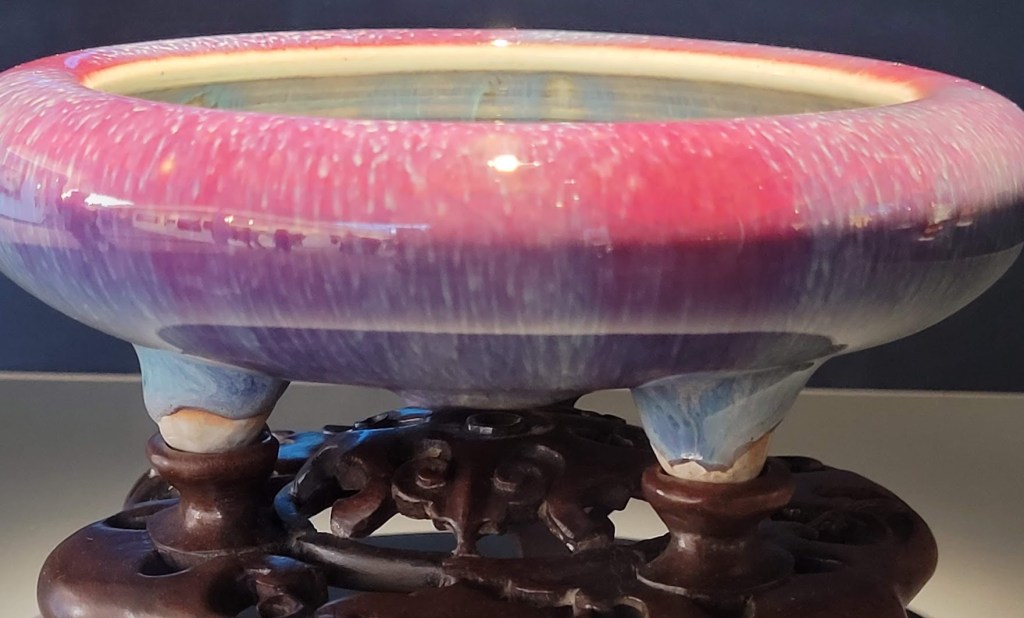
But it’s not even Ruitenbeek’s greatest treasure. That is a lilac-colored porcelain censer, dating from the eighteenth century. It rests elegantly on three legs, and it looks perfectly smooth. You are tempted to touch it, to see if it is as soft as it looks… A piece for connoisseurs…
Starting from Paul Ruitenbeek’s stand, I first visited a few « safe bet » stands, such as Albricht (103) and collection of paintings by the Dutch Impressionists Isaac Israëls and George H. Breitner, Israels represented mainly by his portraits of elegant women, Breitner by his « portraits » of his city, Amsterdam, and its many building sites; at the turn of the twentieth century, it was expanding and being modernised.
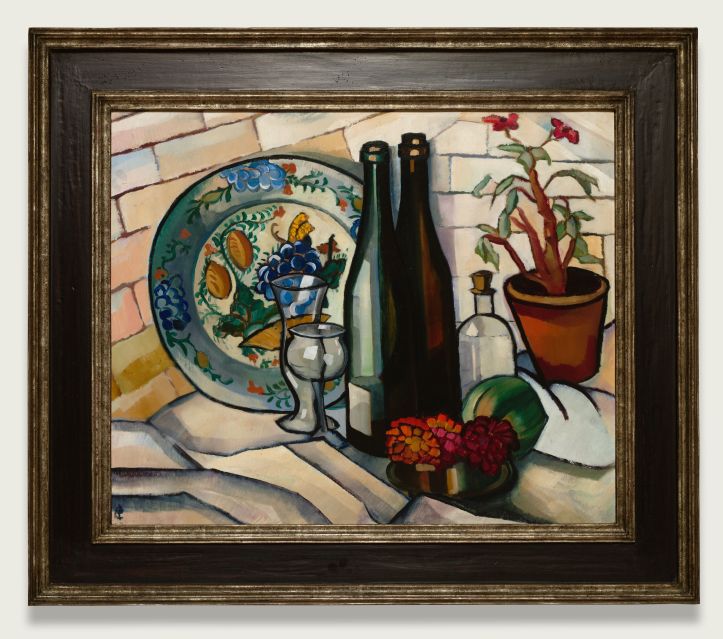
Charley Toorop, Still Life with bottles and plate (Albricht) 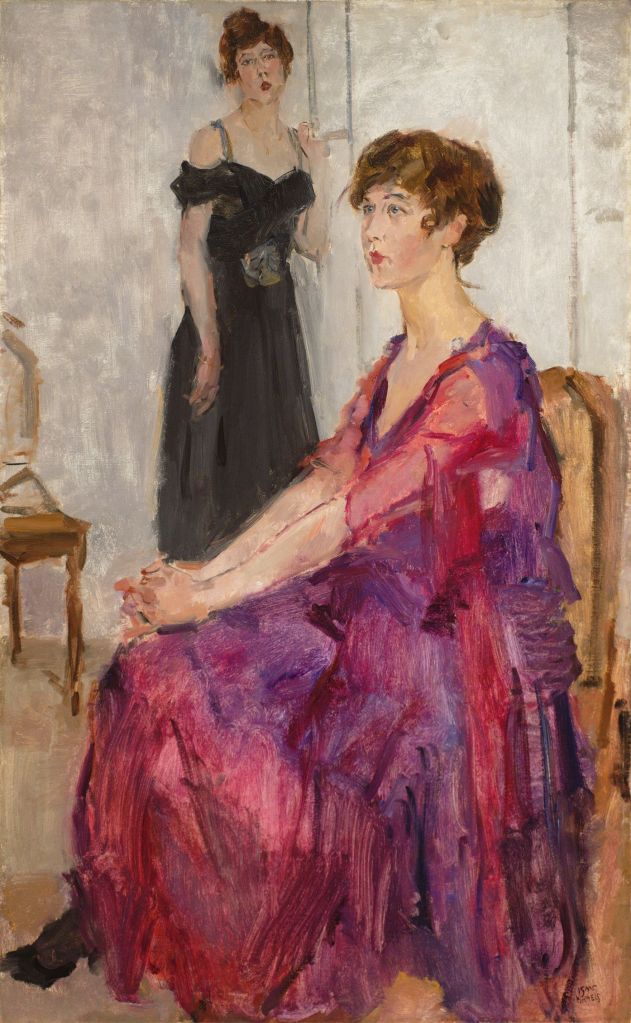
Isaac Israëls, Ippy and Gertie at Fashionhouse (Albricht)Hirsch in Amsterdam 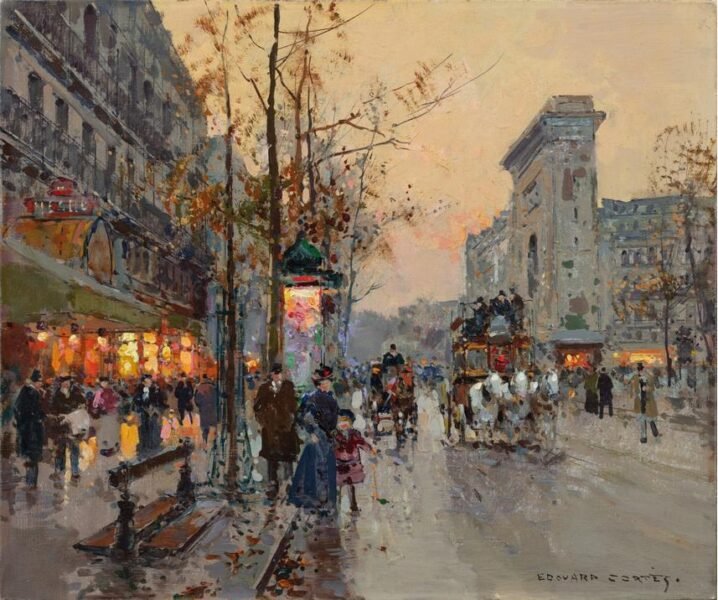
Edouard Cortès, La porte Saint-Denis (Daatselaar) 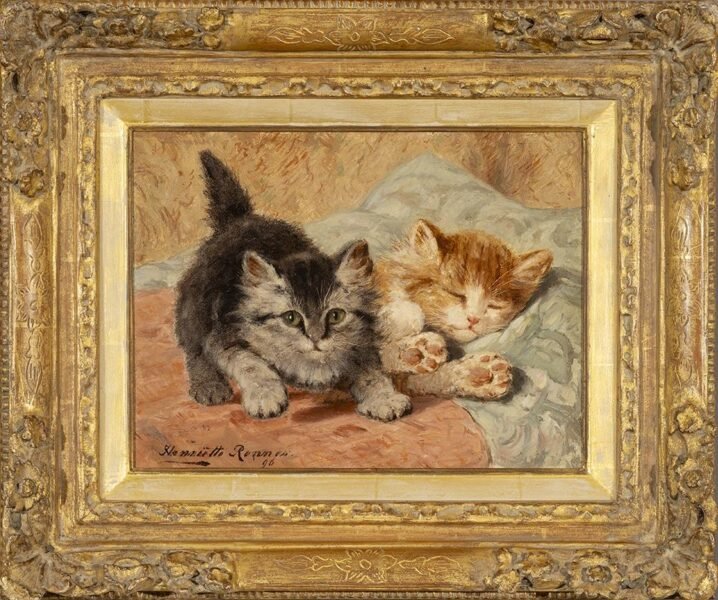
Henriette Ronner-Knip, Two best friends (Daatselaar) 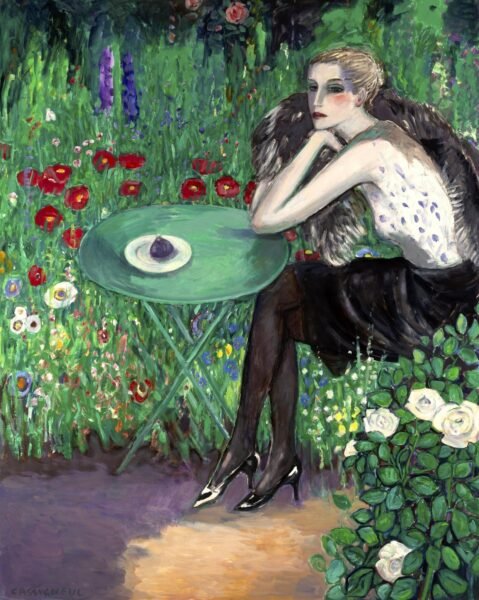
JP Cassigneul, Douceur de mai (Daatselaar) 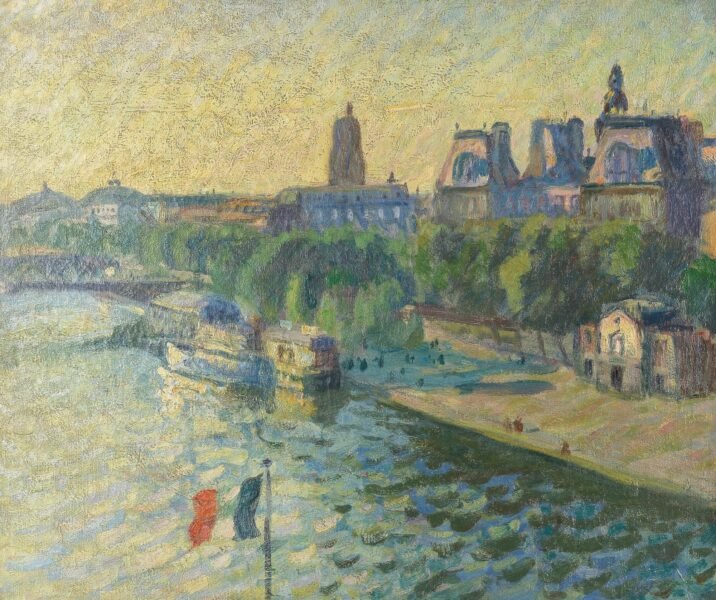
Raoul Dufy, Hôtel de ville, Paris 1904 (Daatselaar)
At the Daatselaar gallery (40), paintings by Israels, but also by the Dufy brothers (yes, Raoul had a younger brother, Jean), as well as by (among many others) Jean-Pierre Cassigneul (born in 1935…), and then… one of the few women among the nineteenth century’s painters, Henriette Ronner (née Knip, 1821-1909). Ronner, who was born into a family of artists, is best known for her « portraits » of cats, and indeed, there are two of them here. Two paintings depicting kittens, balls of down in the middle of a game. It’s adorable, and at the same time, it’s considered a bit of a « minor » subject. But in her time, Ronner’s paintings were highly prized; this is how she supported her family, while her husband took care of the administration. It was only in the twentieth century that people began to disdain this kind of subject, and Ronner’s work took a back seat, to be rediscovered today – like the works of so many other women artists…
I wonder if the same was true of Steinlen‘s famous cats (Galerie Stylo, n0 93). Of course, we know him mainly for his posters and illustrations, with a lot of cats. Was – or is – his art considered a minor art? (That’s a real question; I don’t know the answer.)
All of a sudden, it occurred to me: there are a lot animals in this fair! Of course, they have always been represented in paintings – especially birds and other animals about to go into a meal, living or dead… or exotic animals. But what I see at this fair is a little different; I see all kinds of animal sculptures – and often they have a somewhat… weird, disturbing side, especially in texture. Subsidiary question: has taxidermy become a “recognised” artistic skill? I think I have seen several “sculptures” in which either taxidermy played a role, or made with materials that seem to imitate skin, or hair…
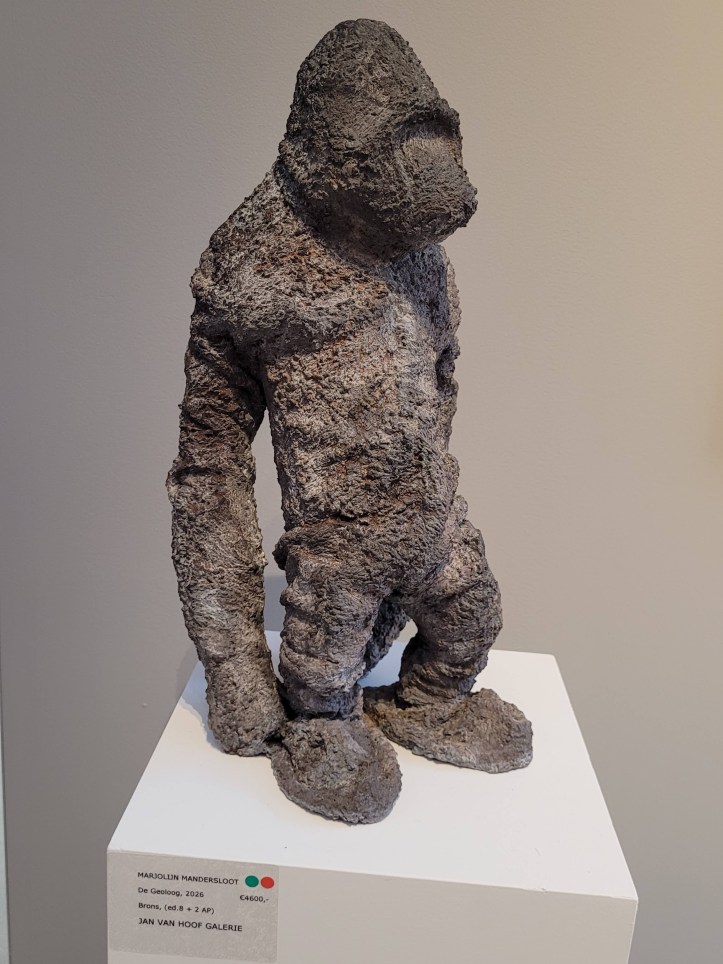
Marjolijn Mandersloot, The geologist, Jan van Hoof galerie 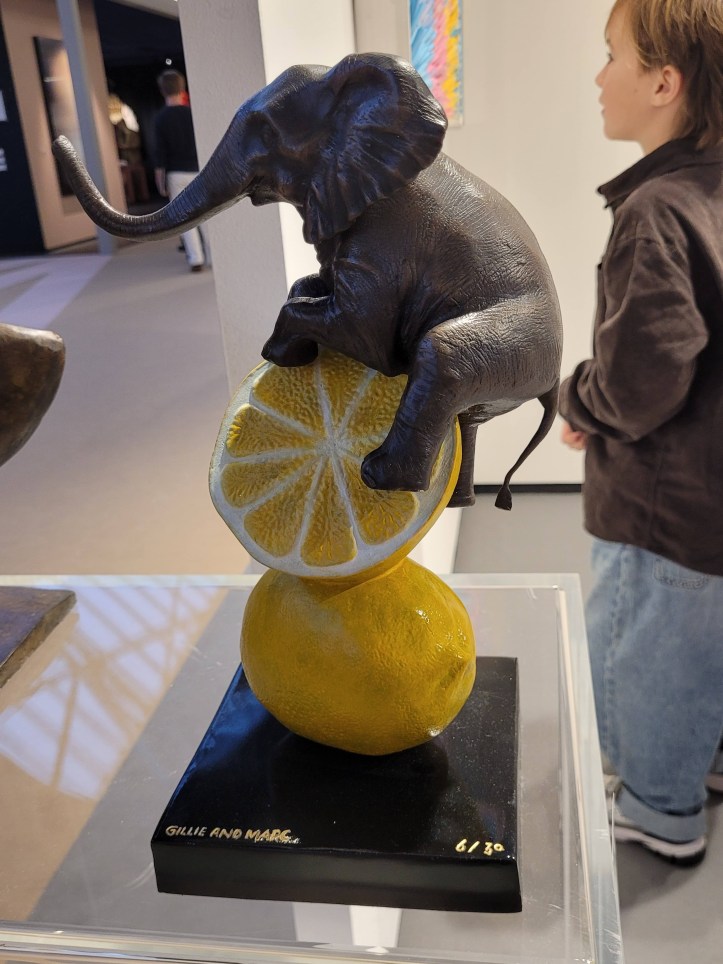
Gillie and Mark (Australia), Elephants really love lemons, 2024. Okker gallery 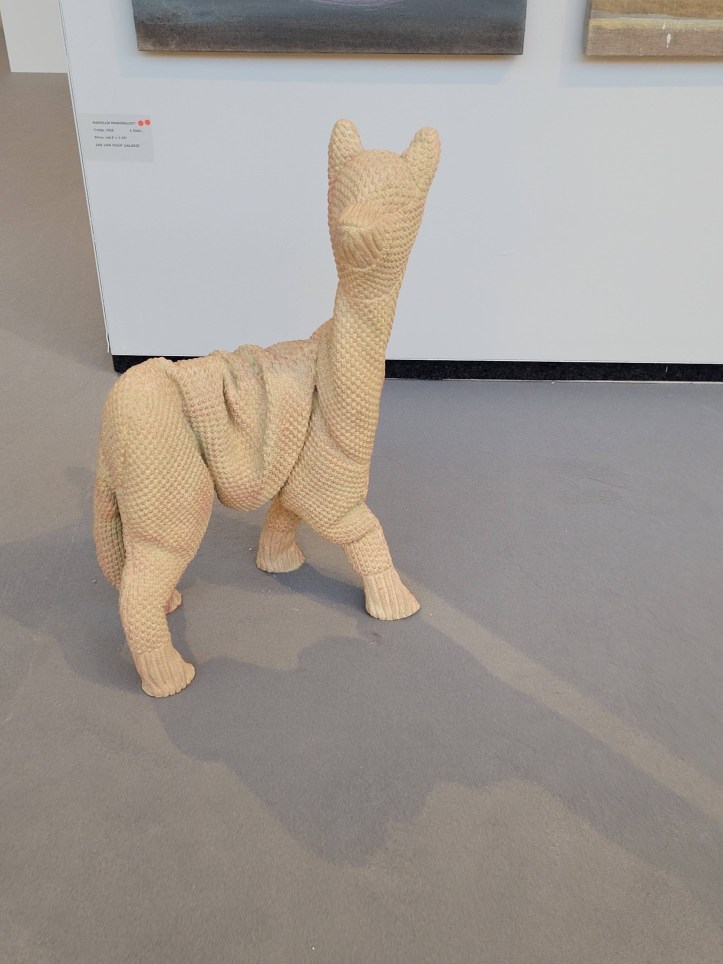
Marjolijn Mandersloot, Truitje (shirt), 2025, Jan van Hoof gallery 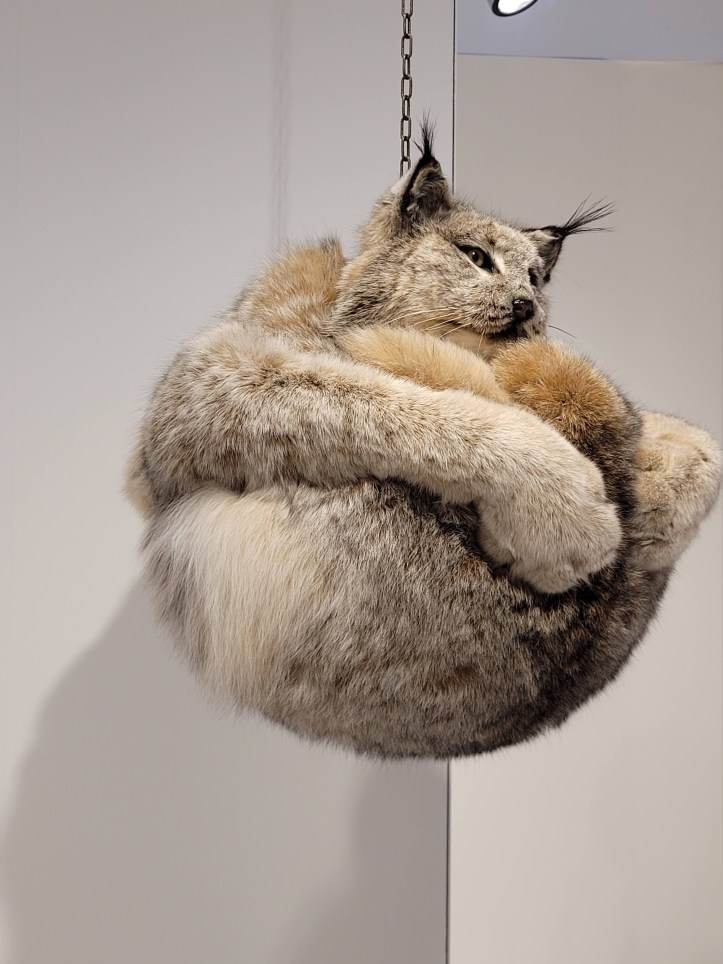
Les Deux Garçons, Moment de réflexion. galerie Jaski 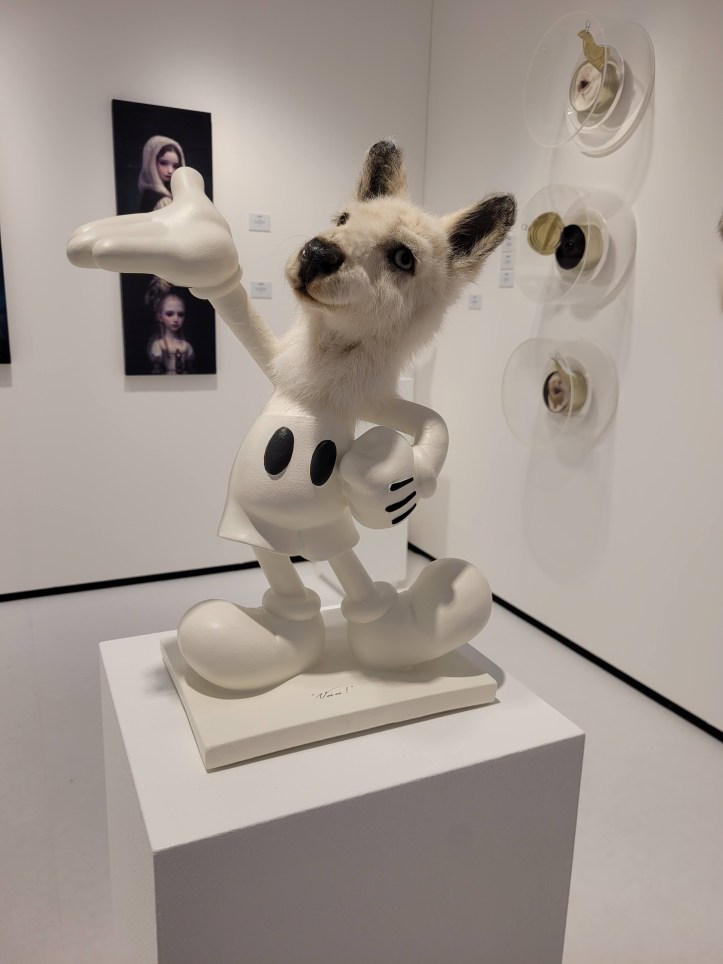
Les Deux Garçons, Voici. galerie Jaski 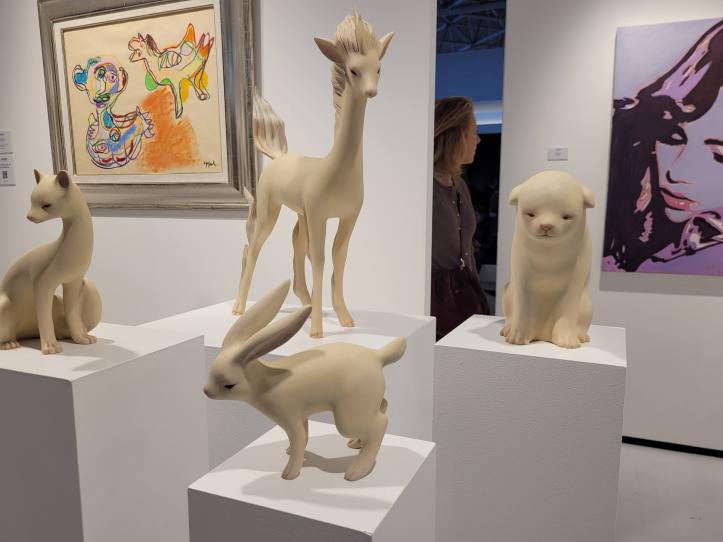
Sculptures by Yoshimasa Tsuchiya, galerie Jaski
This was particularly clear at the booth of Jaski. Among Jaski’s « protégés » are Les Deux Garçons (Michel Vanderheijden van Tinteren (1965) and Roel Moonen (1966)). Their animal sculptures are often made, at least in part, using taxidermy. They also use other techniques, but the result is often the same: they make animals you want both to touch and to push away. I knew their work, at least in part – but now, their animals seem to become even more « human », and therefore more touching as well as disturbing.
Les Deux Garçons are not the only artists to make a somewhat disturbing kind of animal sculptures, far from it. It begins with the gorilla at the entrance. I wouldn’t feel at ease if I met him somewhere…
But there were also charming animals at this fair, even in contemporary art. Take Erik Buijs’ sculptures (1970). His little fellows and doggies may be a tat Charlie Brown-ish, worrying, wondering what’s going on; you would like to comfort them, to take them in your arms, whatever their size or material (Huub Hannen gallery, 57). They are human but not scary…
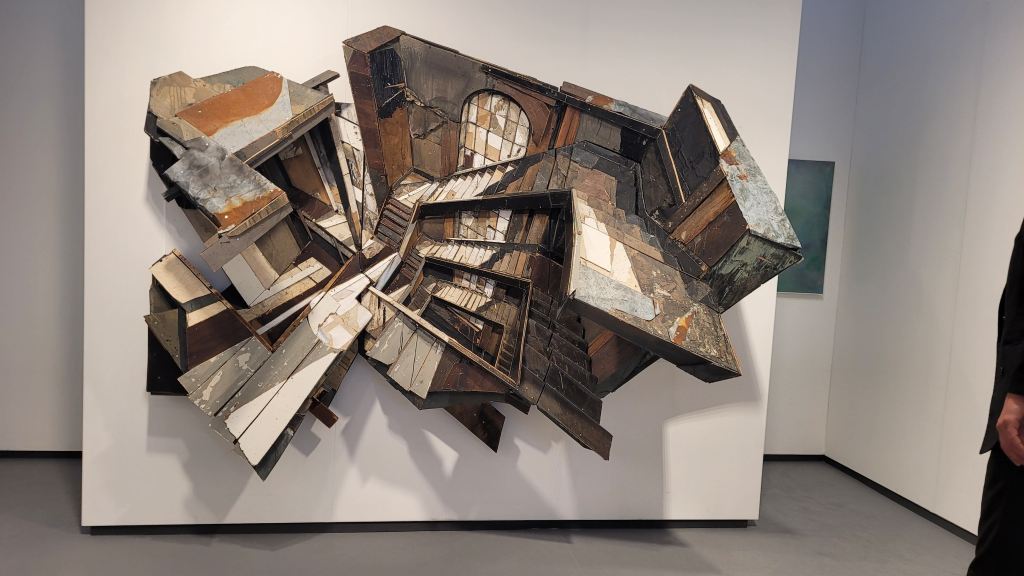
And finally, I want to mention an artist, Pim Palsgraaf (1979) whose work has nothing to do with animals and is – in my eyes – not sad or disturbing. On the contrary, though he draws his materials from places in decline, abandoned factories, buildings in ruins. Pim Palsgraaf works with recycled materials, wood, metals. He makes something new out of it, a work of art, sculpture or three-dimensional “picture”, an intriguing object you want to watch from every angle – and that might give one hope, since that what was thrown out is transformed into a work of art. (NL=US Gallery, stand 45).
PAN 2026 is finished, we will have to wait until November 2027 for a new version. But next week will be Amsterdam Art Week (many galleries will be taking part), in December the Affordable Art Fair, also in Amsterdam, and next spring the Rotterdam Art Fair, not to mention TEFAF, the largest art fair in Europe (Maastricht, March 2027), or the fairs and other cultural events in Antwerp and Brussels…
En savoir plus sur Vu du Nord
Abonnez-vous pour recevoir les derniers articles par e-mail.


