Témoignages de l’holocauste
English version : click here
Informations pratiques: cliquez ici
Plus que jamais, peut-être, il est important de commémorer la Shoah. Et pas seulement durant la « Journée internationale de commémoration de l’Holocauste », le 27 janvier. Plus que jamais il faut être conscient du passé ; avec une extrême droite qui pointe son nez (ou plus que ça) un peu partout, d’autant plus dangereuse que les jeunes générations sont souvent ignorantes du passé; en témoignent les actes de discrimination – raciale, religieuse, ou autre – qui se multiplient dans de nombreux pays ; rien qu’aux Pays-Bas, la commémoration de l’Holocauste a suscité des réactions antisémites d’une grossièreté inimaginables. Plus que jamais, il faut se rendre compte jusqu’où ces actes peuvent mener, et comment on glisse de discriminations raciales au génocide.
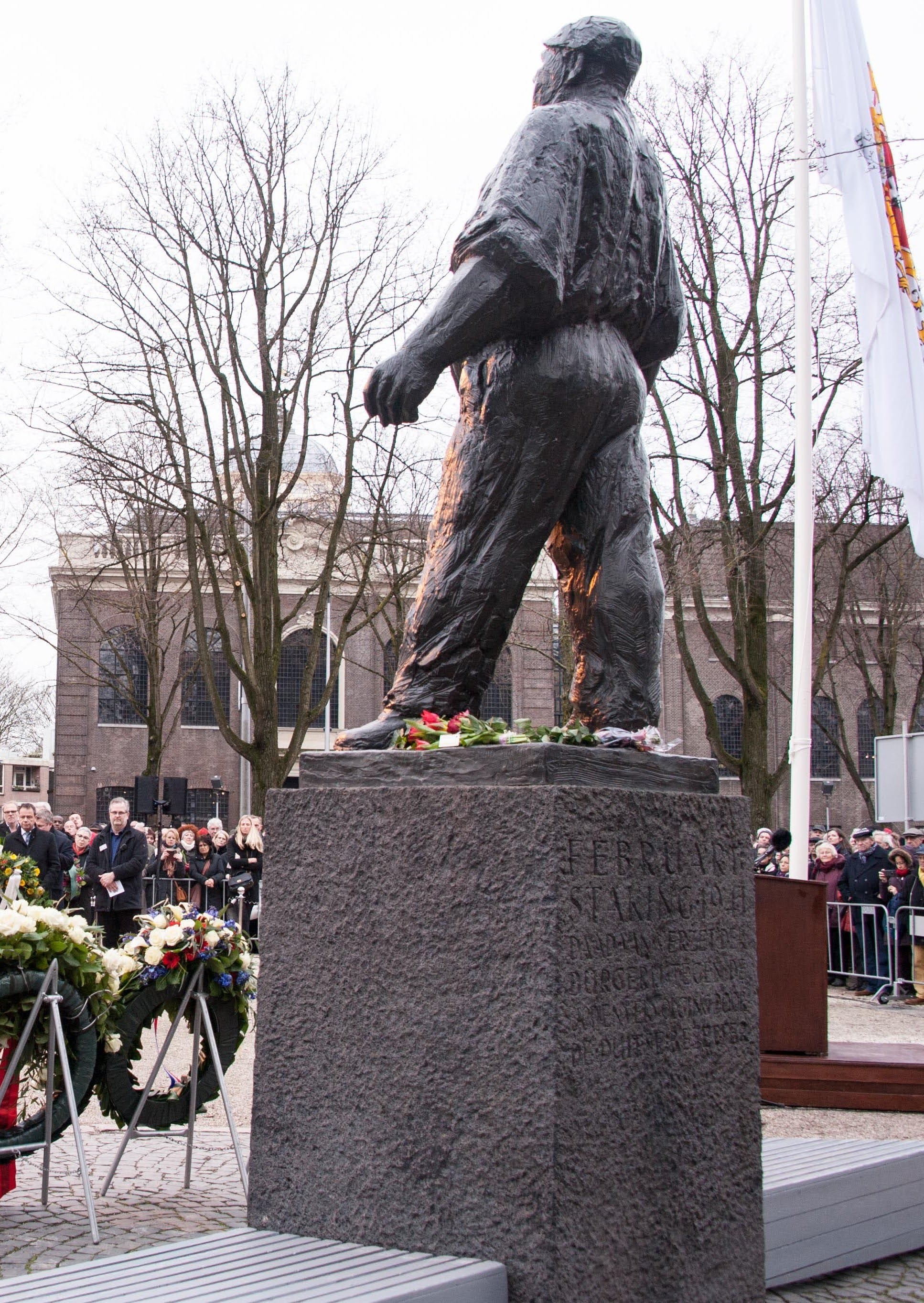
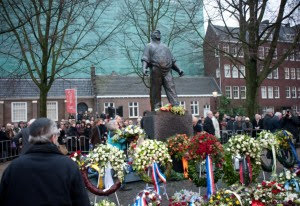
À Amsterdam, c’est tout un quartier – l’ancien quartier juif, au centre de la ville, près du Waterlooplein et son marché aux puces – qui rend ce passé visible et sensible. De la statue du Docker, symbolisant la grève de février 1941 contre les premières déportations, au récent Monument aux noms (des déportés), érigé bien trop tardivement, mais qui n’en est pas moins impressionnant.
Ci-contre : Le Docker, symbole de la grève du 25 février 1941. Photo JW
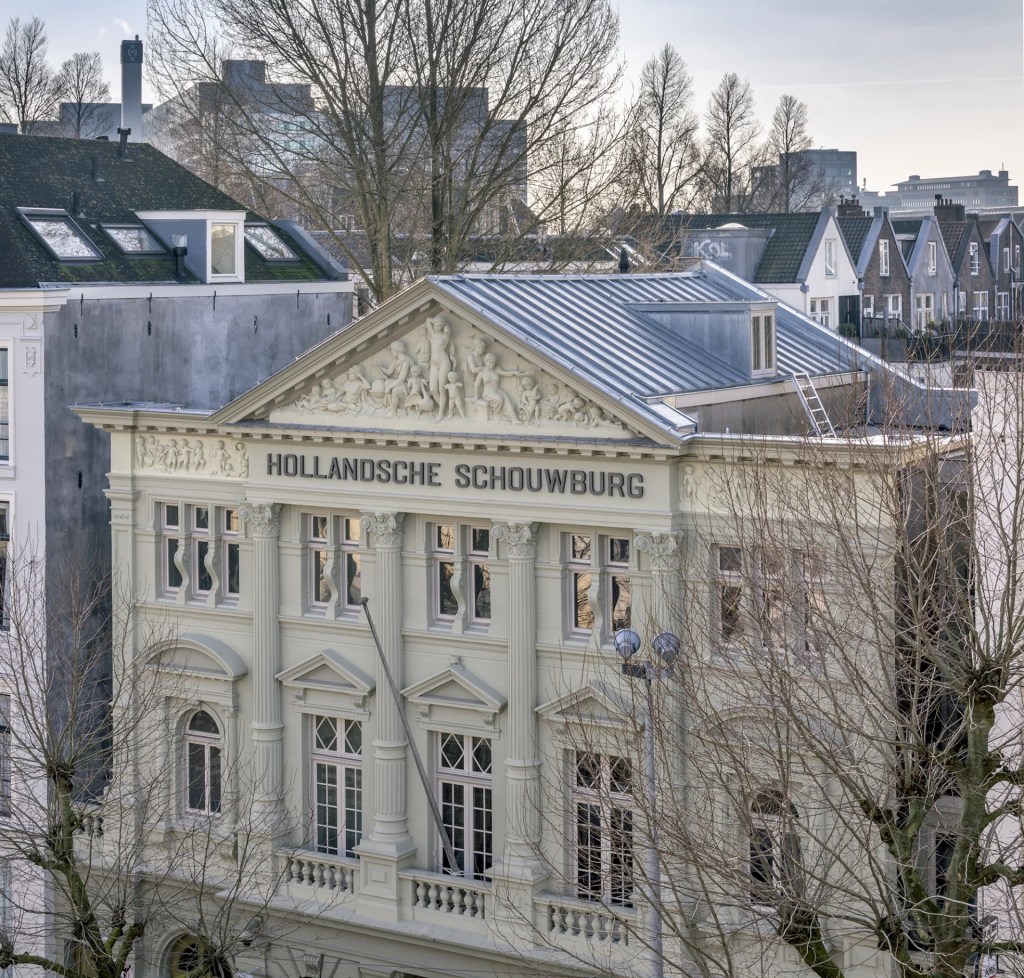
Et du Hollandsche Schouwburg (« Théâtre hollandais », l’équivalent à Amsterdam du Vél d’hiv de Paris) devenu un impressionnant Lieu de Mémoire, aux différents musées: le Musée Juif, la Synagogue Portugaise, et, le petit dernier, le Musée de l’Holocauste, juste en face du Hollandsche Schouwburg et à l’endroit même où se trouvait une École Normale, jouxtant une crèche où des femmes courageuses (aidées de leurs voisins de l’École Normale) faisaient échapper au massacre autant d’enfants qu’elles pouvaient.
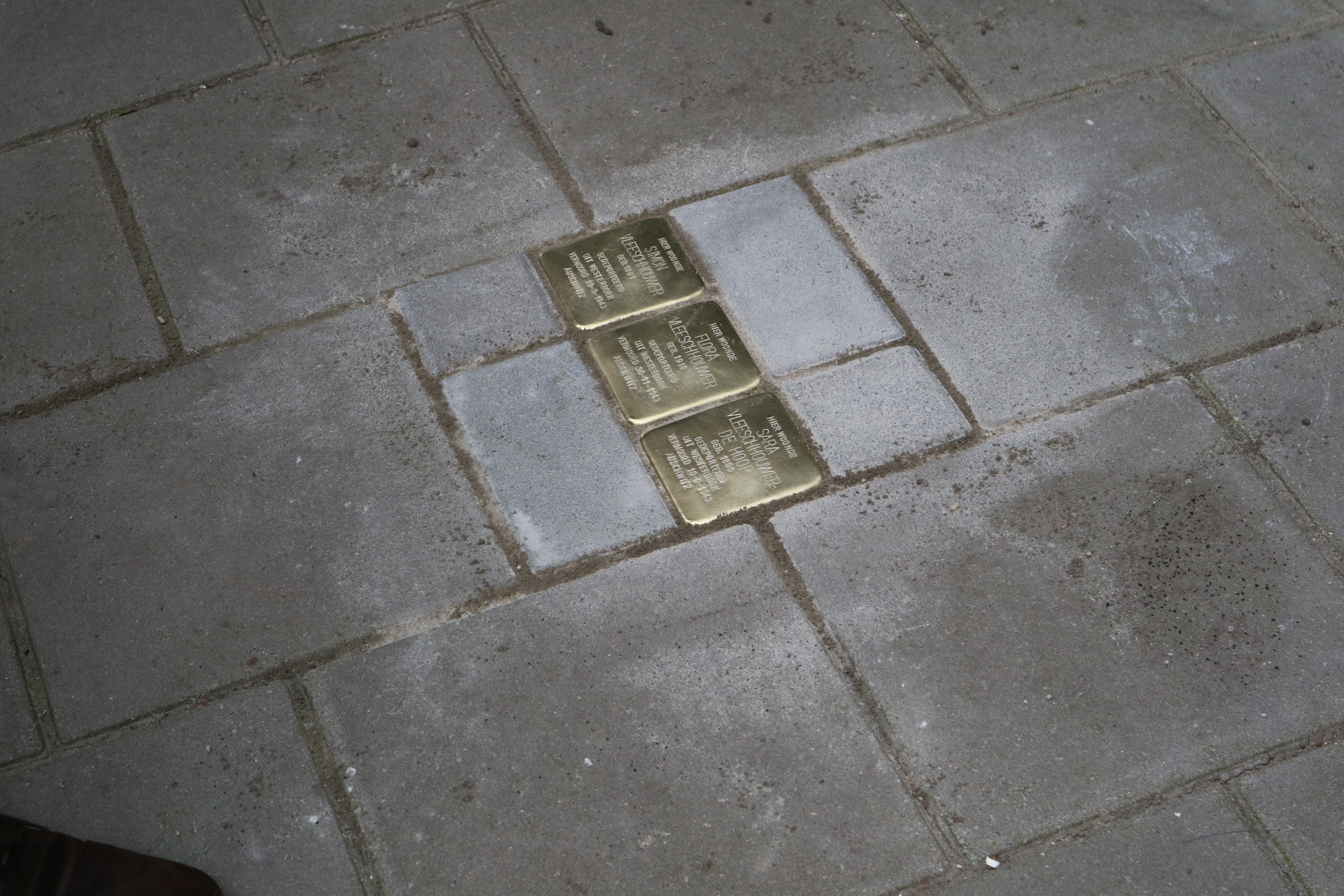
Et si tout cela ne suffisait pas pour faire revivre le passé, il suffit de regarder par terre, où de nombreux « pavés de mémoire » – ces pavés en laiton appelés en allemand« Stolpersteine », « pavés sur lesquels on trébuche » – rendent visibles de nombreux endroits (pas tous, loin de là) où habitaient des victimes de ces déportations.
Témoignages
Mais revenons au Musée de l’Holocauste et ce Théâtre Hollandais en face. C’est là qu’on présente plusieurs histoires individuelles de victimes de la Shoah, dont certaines ayant survécu (aux Pays-Bas: moins de 40.000 sur 140.000…).
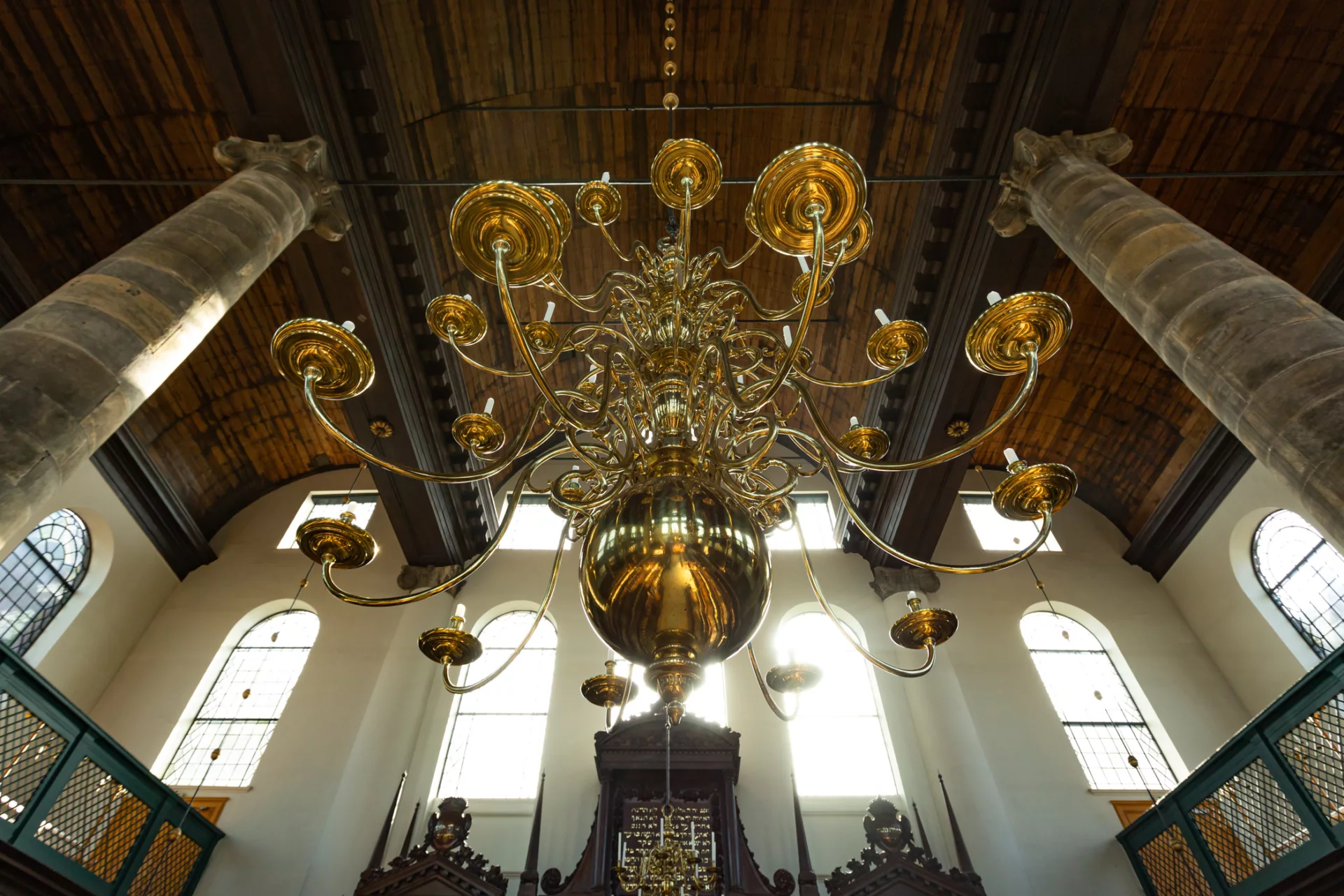
C’est d’un grand nombre de ces survivants, de par le monde, que la USC Shoah Foundation a enregistré les témoignages, sachant que bientôt il n’y aurait plus de survivant, justement, pour témoigner. Le Hollandsche Schouwburg est le seul endroit du Benelux où il est possible de consulter (sur rendez-vous) ces presque 60.000 témoignages filmés (dans 69 pays et en 44 langues).
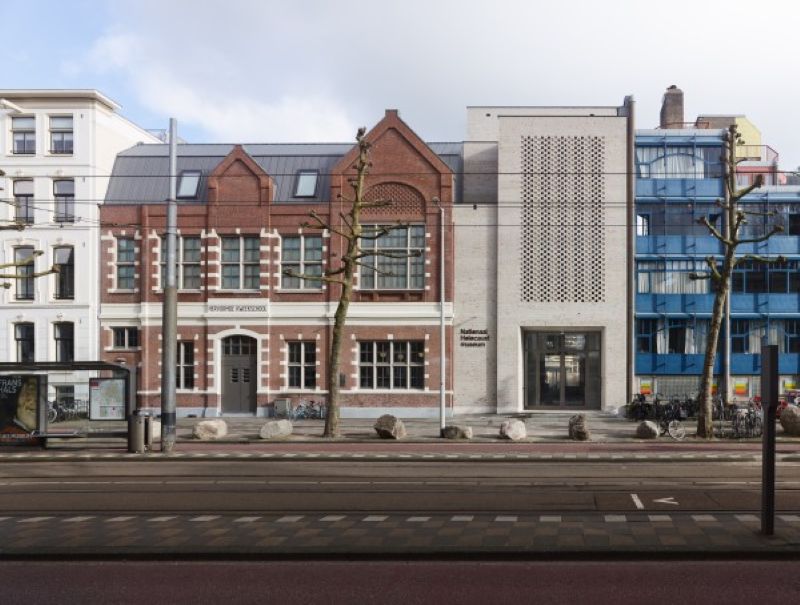
Mais une douzaine de ces témoignages – onze témoins Juifs, un Rom – sont visibles en face, au Musée de l’Holocauste, et sans rendez-vous. Ils font partie de l’exposition temporaire (jusqu’en novembre 2026) « Please Continue… »
Ces personnes, parlant dans leur langue d’origine ou d’adoption (sous-titrés en anglais et en néerlandais, mais avec des explications dans plusieurs langues, dont le français) racontent le chemin qu’ils ont suivi, souvent littéralement. Certaines personnes, fuyant la persécution nazie, ont traversé toute l’Europe, en long et en large, avant d’être quand même arrêtées et conduites vers un camp. Plus tard, vers la fin de la guerre, quand les Russes avançaient, les Allemands ont fait retraverser l’Europe à leurs victimes encore en vie. Encore plus tard, certains prisonniers, une fois libérés, ont de nouveau dû errer de pays en pays avant de trouver un endroit où s’établir…
Cela donne à penser. Moi, en tout cas, j’y vois un parallèle avec les frontières fermées d’aujourd’hui ; avec les camps d’« accueil » où des personnes espérant un refuge, se retrouvent après des périgrinations longues et hasardeuses…
dialogues
Mais retour aux témoignages des survivants des camps nazis. Parmi les douze témoins, montrés sur des panneaux individuels devant lesquels le visiteur peut s’installer, il y en a deux, projetés en grandeur nature, avec qui on peut, en quelque sorte, dialoguer. C’est-à-dire qu’on leur a demandé tant de détails, qu’ il est possible, à partir de leurs réponses enregistrées, de « distiller », à l’aide de l’intelligence artificielle, la réponse adéquate. C’est un petit peu effrayant, mais surtout très intéressant. Et pas seulement un jour par an…
Les générations nées bien après la seconde guerre mondiale, et sans aucun lien (de mémoire familiale) avec elle, ont besoin d’être informées, encore et encore. Mais même si l’on « sait », il est utile, voire nécessaire de se rafraîchir la mémoire de temps à autre.
Et pour conclure…
Le Quartier Culturel Juif a publié une déclaration concernant la guerre d’Israël contre Gaza (en anglais). Cela ne devrait pas être nécessaire, mais ça l’est ; la preuve : les manifestations contre la présence du président d’Israël, M. Isaac Herzog, lors de l’inauguration du Musée de l’Holocauste en mars 2024. Ces manifestations n’avaient d’ailleurs pas forcément un caractère antisémite. En revanche, sur les réseaux dits sociaux, nombre de réactions à la commémoration de l’Holocauste étaient d’un antisémitisme effroyable, allant jusqu’à nier la réalité des chambres à gaz… D’après une enquête récente de l’UNESCO, trois quarts des enseignants européens ont eu affaire à des incidents antisémites dans leurs classes; dans plus d’un quart des cas, il s’agissait de plusieurs incidents.
Plus que jamais, l’enseignement, les témoignages et, disons, le rafraîchissement de la mémoire collective sont indispensables.
Informations pratiques
Informations pratiques
Musée de l’holocauste Plantage Middenlaan 27, Amsterdam (tram 14, metro, station Waterlooplein). Ouvert (presque) tous les jours (consulter site) de 10 h à 17 h, comme tous les musées et monuments du Quartier Culturel Juif (JCK). Billets : adultes €20,- (billet combiné avec celui du Musée Juif (Joods Museum) & Junior €30,-), ados (13-18 ans) €8,-, enfants 6-12 ans €5,-), < 6 ans, IRCOM, Museum Pass, etc : gratuit (voir site). Hollandsche Schouwburg : Plantage Middenlaan 24, Amsterdam. Accès libre. Synagogue Portugaise, Mr Visserplein 3 (en face du musée Juif, dont le ticket est valable pour la synagogue) à visiter du dimanche au vendredi 10h-17h. Et chaque année, au pied de la statue du docker, une cérémonie commémore la grève du 25 février 1941 – cela fera 85 ans en 2026.
Plus d’images dans la section anglaise
Back To Top – Retour en haut
Back To Top – Retour en haut
English version
Remembering…
Reflexions around the International Holocaust Remembrance Day
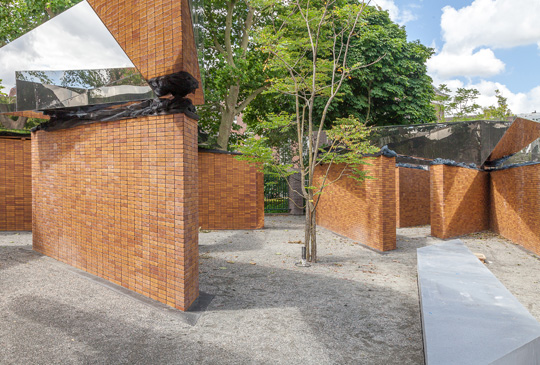
Photo ©Dirk P.H. Spits
It took us, the Dutch, time to realise we had to come to terms with the past, in particular with the colonisation – I’ll come to that later – and with everything that happened during (and shortly after, and before) WW II; even more precisely, the deportation and assassination of so many Jews – more than in any other West-European country – and the chilly – to say the least – welcome the few survivors received when they came back.
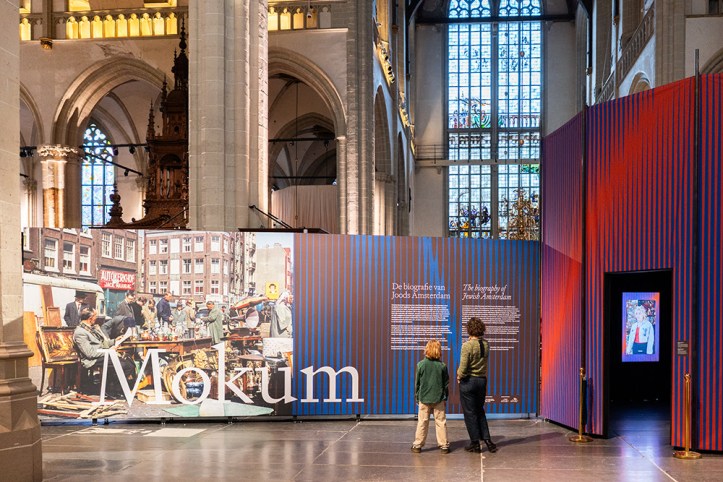
A few figures. Before the war, the Netherlands counted 140.000 Jews, many of whom lived in Amsterdam (see my post on Mokum). In 1945, hardly 38.000 survived. Those who made it back « home » often found their home – and their belongings – taken by others, their family silver (for instance) appropriated by neighbours of « friends » supposed to take care of it until the return of the legitimate owners. Some of these survivors left, disillusioned, for Israel, the US or elsewhere, far away. Others stayed, shut up, worked hard, and tried to make a new life for themselves. For years on end, even decades, WW II was hardly a subject for historians, the persecution of the Jews and Roma even less. The reconstruction of the country was what counted.
This changed in the 1970s, a younger generation asking questions – and searching for responsabilities. Since then, from witness accounts to historical studies to documentaries and more, much came to the surface. And finally, we realised we needed both commemorations and monuments.
Oh, we did have a few. The 5th of May, day of the liberation of (the last part of) the Netherlands, very soon became Liberation Day (at first a regular holiday, now an official holiday only once every five years (we shouldn’t lose precious working days, should we?). The day before, the 4th of May, was a kind of remembrance day almost from the beginning ; but a quiet, not to say a silent one.
Read more….
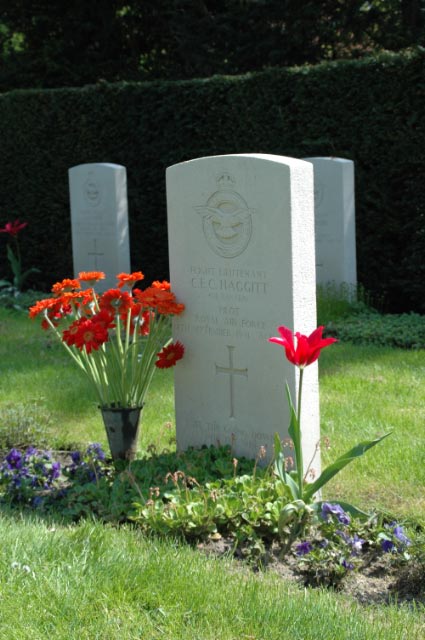
As a kid, I used to accompany my mother to the cemetery that day, and in particular to the Commonwealth War cemetery where our family friend, Canadian RAF-pilot Clarence Haggitt, was buried. Clarence – « Cal » – was only 30 when he died for our freedom ; some of his comrades were even younger, 20 or 21, like RAF flying officer Frank Huntley, buried in the same cemetery – where one finds also a lot of Polish graves. In general, we went there in the early evening, deposed our flowers, and took the tramway back home. At 8 pm sharp, the tramway – and the other traffic – stopped. Everyone remained silent and motionless, for two minutes. Then, the city came to life again.
commemorations
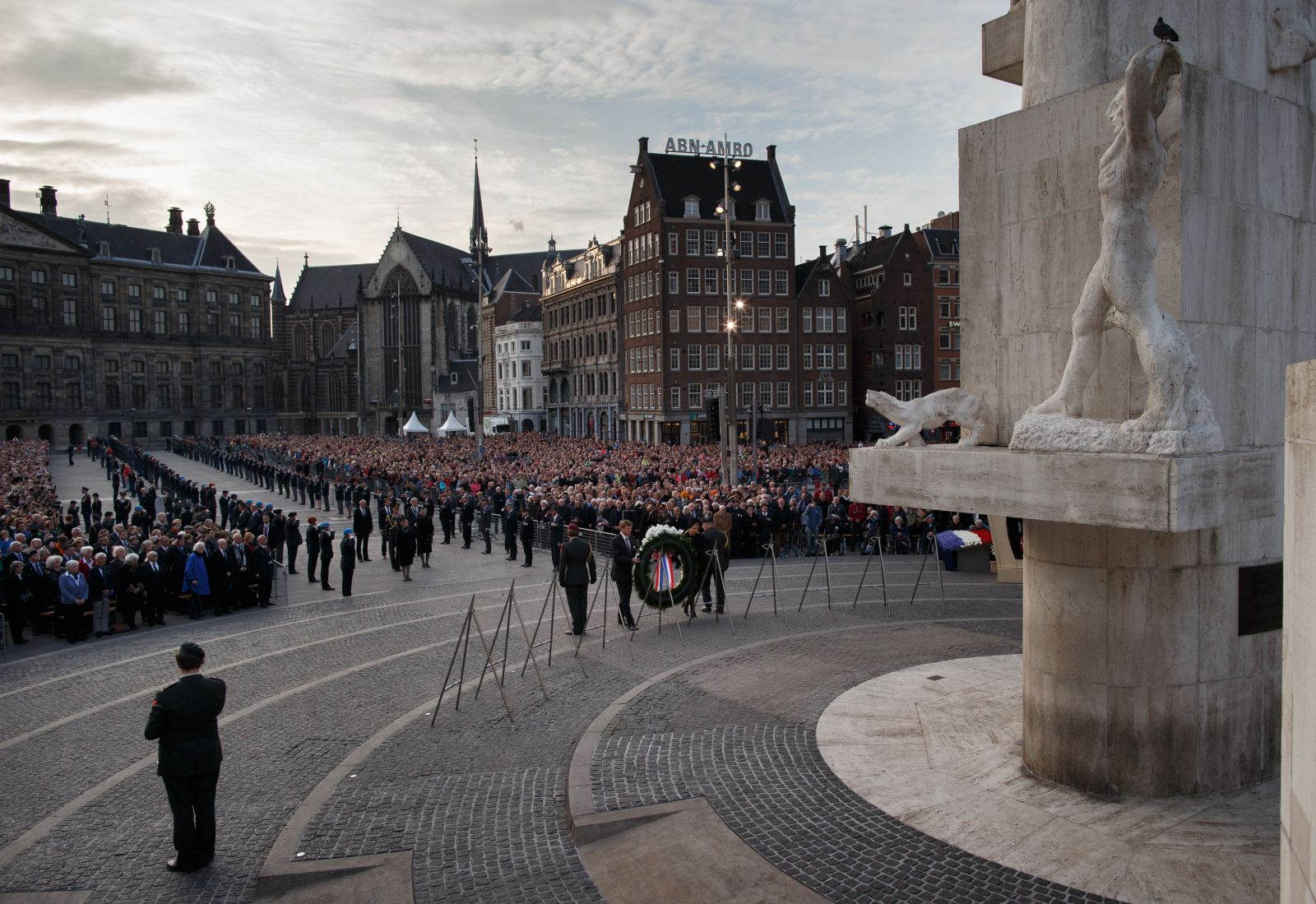
For a long time, that was the only commemoration of the dead. All those who died in WWII, not only the Jews and other victims of the death camps. There was a kind of national commemoration at the parliament, but it was all very formal and rather hush-hush. Later, a few years after, finally, the National Monument on the Dam Square in Amsterdam was finished (1956, by John Raedecker), Queen Juliana began presiding a modest ceremony there, at 4 pm, when everyone else was at work. It was only from 1988 on that, every year on the 4th of May, the head of State – first Queen Beatrix, now King Willem Alexander – presides an important national event at that central place; but in many, many other places people just come together toward 8 pm – and remember.
In my area, we gather around the small statue of Anne Frank, in front of the building where the family lived before they had to go into hiding; elsewhere, people commemorate near places where resistants were shot. At long last, it seems to have become an event that concerns everyone.
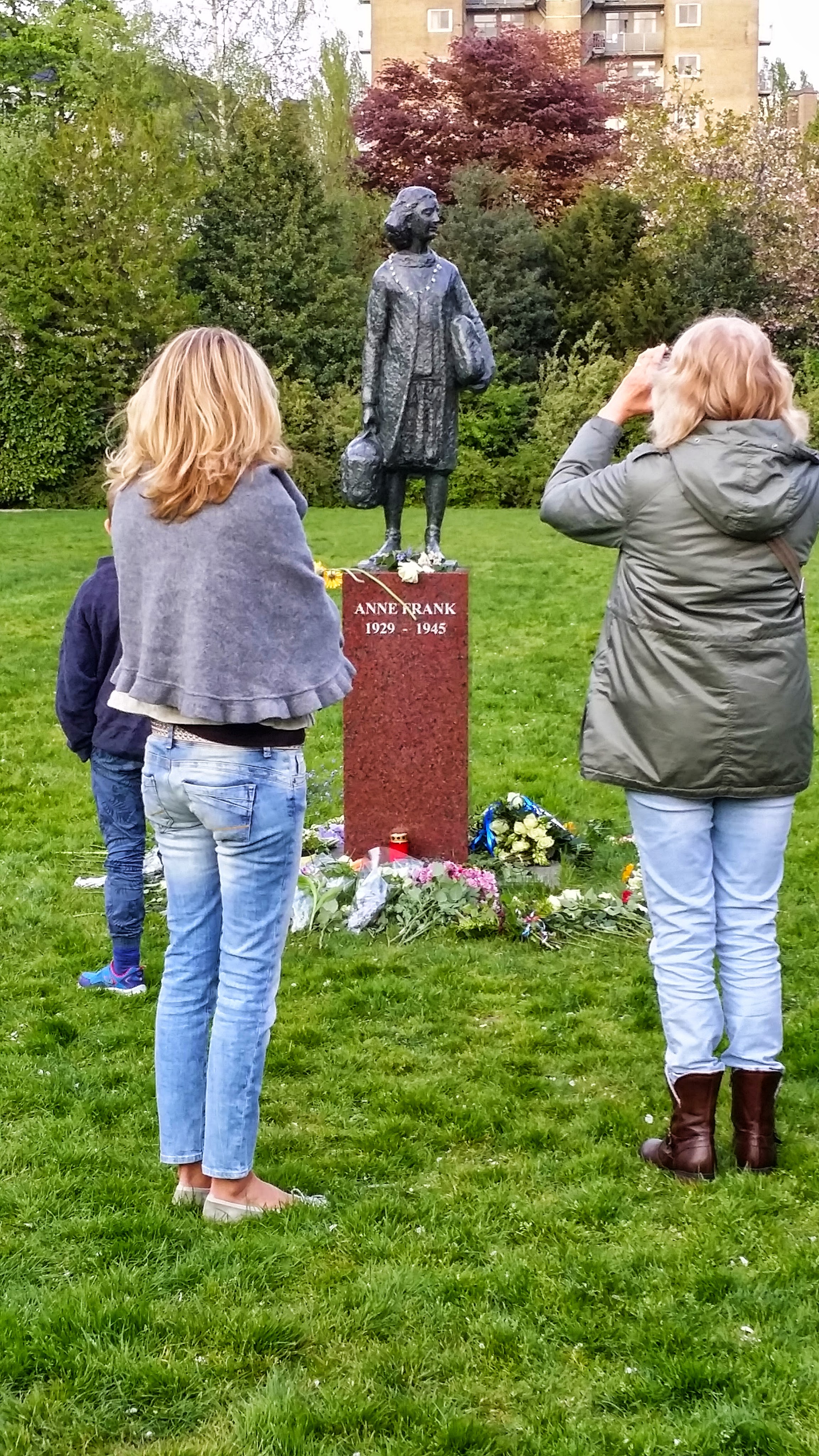
Officially, the 4th of May commemorates all those killed in WWII, even all those killed in any war, even though, more often than not, it is about the Jewish victims. On 27 January 1945, Auschwitz was freed by the Russian army and 75 years later, in 2005, the United Nations created the International Holocaust Remembrance Day. In Amsterdam, it is commemorated every year, mainly by Jewish people, near the Auschwitz monument, well hidden in a small park.
Still, we didn’t have a national monument for the victims of the Shoah, as opposed to, for instance, France, where the names of all the victims are visible in an impressive shrine in Paris. In 2021, seventy-six years after the end of the Second World War, at long last, King Willem Alexander inaugurated this impressive « wall » showing the 102.000 names of the Jewish victims, and the 220 Roma or Sinti who were killed by the nazis (picture at the top). This Memorial, like the statue of the Docker – in remembrance of the only strike against the deportation of Jews – is in the old Jewish area, where several monuments and museums remind us of the past. The Docker faces the Jewish Museum, and turns his back to the old Portuguese Synagogue. Nearby, on the Plantage Middenlaan, the former « Dutch Theatre » (Hollandsche Schouwburg) – where during the war the Jewish inhabitants of Amsterdam were assembled in view of their deportation, has been turned into an impressive monument. Just across the street, the latest « corner stone » of this area where the past is so present : the Holocaust museum, on the very spot of a former teachers training college, where very brave people helped their neighbours from the nursery next doors to rescue as many children as they could…
witnesses
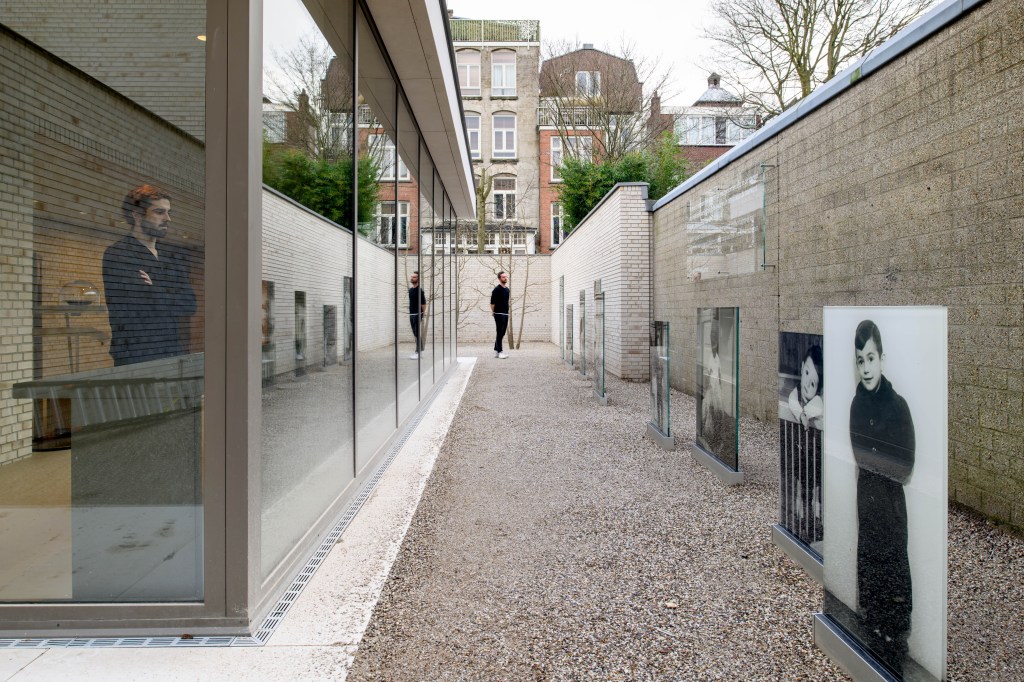
This museum, as its name indicates, retraces the persecution and assassination of the Jews, as well as the Roma and Sinti, of the Netherlands. It is as impressive as the name suggests. A temporary exhibition, « Please Continue… Conversations with Holocaust Witnesses« , an exhibition made jointly with USC Shoah Foundation… » (until 8 November 2026) makes these experiences even more tangible. Here, we can listen to (and view) 12 survivors of the Holocaust -11 Jews, one Romani – from different countries, who tell their story – which often led them through large parts of Europe, both before, during and after their deportation: first fleeing the Nazis, then, when they were taken prisoner, during their transport to the camps. When the allies were getting close, the prisoners still alive often were transported again, sometimes on foot, hundreds of kilometers despite their condition, and despite the weather. And finally, after the camps were freed, they had to cross huge distances again to reach home – or to find a home elsewhere… Maps show the itineraries, from East to West, from South to North… It is even possible to ask questions to two of these witnesses. They were interviewed so extensively that – thanks to AI – they can « answer » most questions. I thought I knew a lot about the Shoah, but here, I learned a lot more.
The Jewish Cultural Area published a declaration about Israel’s war against Gaza. That should not be necessary, but apparently, it is : the presence of the president of Israel, Isaac Herzog, at the opening of the Holocaust Museum in March 2024, led to angry demonstrations – which were not necessarily antisemitic, but they did link the museum to Israel’s war in Gaza – a link one may question. However, on the social media, many reactions to the Holocaust Remembrance ceremony were unmistakebly antisemitic; some even denied the reality of the gas chambers… According to a recent study published by UNESCO, three European teachers out of four encountered antisemitic incidents in their classrooms.
No doubt about it : more than ever, teaching, educating today’s youth in this field is an absolute necessity, as is reminding us of the past.
Practical information
Holocaust Museum Plantage Middenlaan 27, Amsterdam (tram 14, metro station Waterlooplein). Open (almost) every day (see website) from 10 am to 5 pm, like all the museums and monuments of the Jewish Cultural Area (JCK). Tickets : adults > 18 years €20,- (combined ticket with the Jewish Museum (Joods Museum) & Junior €30,-), youngsters 13-18 years €8,-, children 6-12 ans €5,-), < 6 years old, IRCOM, Museum Pass, etc : free (see site). Hollandsche Schouwburg : Plantage Middenlaan 24, Amsterdam. Free access. Portuguese Synagogue, Mr Visserplein 3 (across the Jewish Museum) open for visits 10 am – 5 pm. Every year, on February 25th, an impressive ceremony is held at the Docker statue, at 5 pm, to remember the strike on that day in 1941, 85 years ago in 2026.
More images in French section
Back To Top – Retour en haut
En savoir plus sur Vu du Nord
Abonnez-vous pour recevoir les derniers articles par e-mail.


